Shaoxing Catsyn Co., Ltd. Tel : +86 (0)575-82040869


Products
+86 (0)575-82040869
sales@catsyn.com
Catsyn offer gram to tons of Holmium(III) chloride, anhydrous, HoCl3 | CAS 10138-62-2, its formula is Cl3Ho, molecular weight is 271.289g/mol and the purity is usually 98% Min..
Synonyms : HOLMIUM CHLORIDE;HOLMIUM TRICHLORIDE;HOLMIUM(III) CHLORIDE;Holmium(III) chloride, anhydrous, ?HoCl3
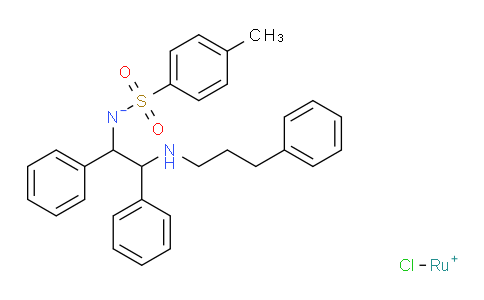
This substance (CAS No.: 10138-62-2) typically possesses a specific molecular structure, possibly containing a transition metal center and organic ligands linked by coordinate bonds to form a stable complex structure. Its physicochemical properties include specific melting and boiling points, solubility, and thermal stability. These properties are significantly influenced by ligand electronic effects (such as inductive and conjugation effects). These electronic effects affect the energy level distribution and catalytic activity by regulating the electron cloud density of the metal center. The expansion of the conjugated system can enhance intramolecular electron delocalization, increase the coordination field strength, and optimize the electron transfer steps in the catalytic cycle. Regarding stability, this substance exhibits good resistance to decomposition under specific reaction conditions (such as temperature, solvent, and pH). Its catalytic activity stems from the synergistic effect between the metal center and ligands, achieving efficient catalysis by lowering the activation energy and stabilizing the transition state or intermediate. In terms of coordination performance, the ligands form stable coordinate bonds with the metal center through lone pairs of electrons or π bonds. The coordination geometry (such as tetrahedral or octahedral) directly affects the spatial environment of the catalytic site and the substrate binding ability. This substance is widely used in catalysis, particularly in organic synthesis, asymmetric catalysis, and polymerization reactions. As a homogeneous catalyst, it enables highly selective carbon-carbon bond formation, redox reactions, and cyclization reactions, significantly improving the yield and purity of target products. Regarding ligand function, it optimizes catalytic performance by modulating the electronic structure and steric hindrance of the metal center. For example, it acts as a key ligand in olefin metathesis reactions, enhancing catalyst stability and activity. Its core applications cover the synthesis of pharmaceutical intermediates, the preparation of polymer materials, and the production of fine chemicals. Its industry value lies in reducing production costs and byproduct generation through efficient catalysis, while simultaneously promoting the development of green chemistry processes. In the field of OLED materials, this substance can serve as a ligand for metal complex luminescent materials. By adjusting molecular orbital energy levels and photoluminescence efficiency, it optimizes device luminescence performance and lifetime, meeting the stringent requirements of high-end display technologies for material performance.